
The construction industry is currently in a transitional phase. As project complexity increases, cost pressure grows, and requirements for precision become more demanding, simple execution of works is no longer sufficient. Modern construction requires structured thinking, process control, and the ability to view a project as an integrated system rather than a collection of individual tasks.
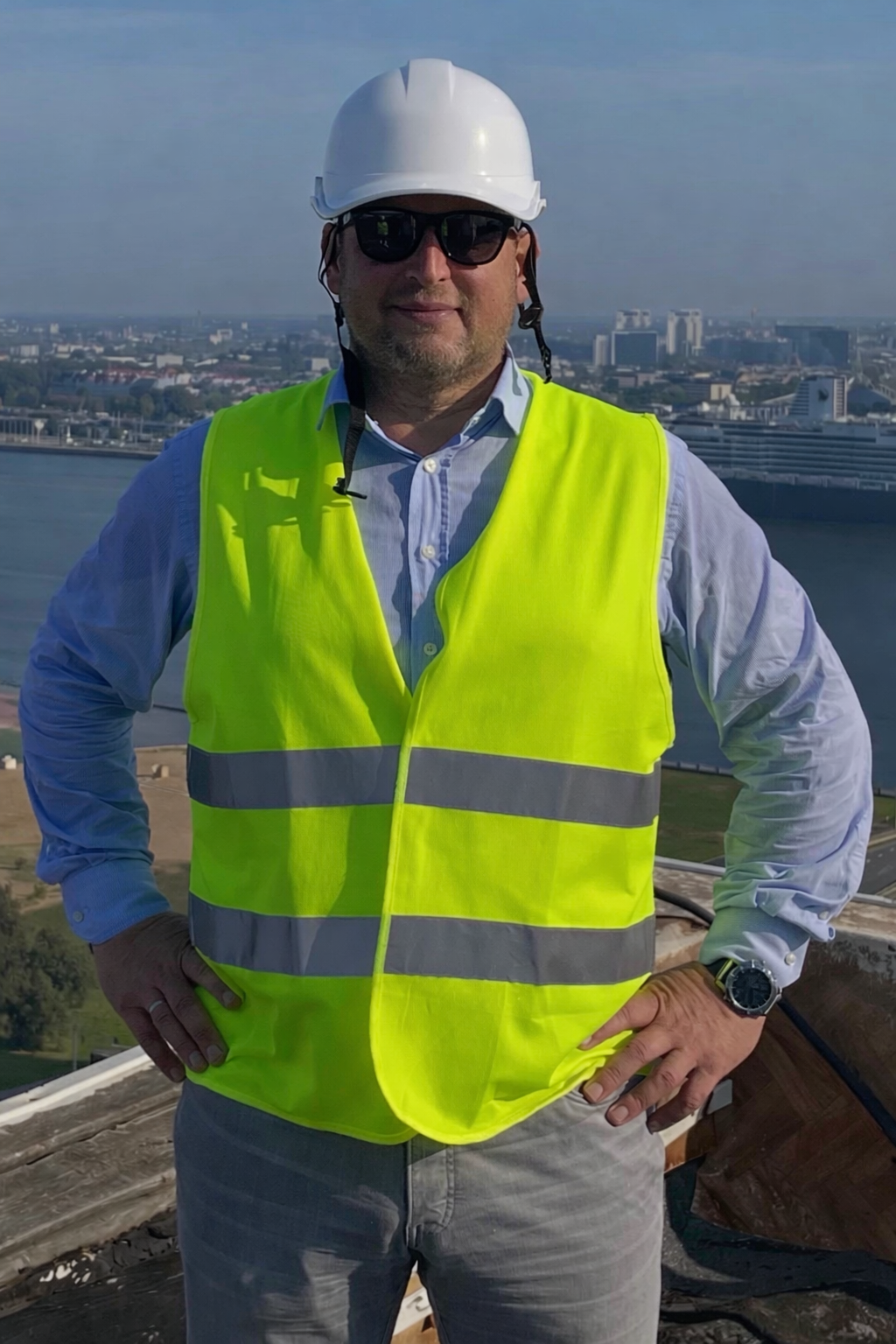
This exact approach is implemented in daily practice by Zigmārs Zandersons, Head of the General Construction Department at SAFE GROUP.
From the Construction Site to Systemic Management
Today, the role of a general construction manager is no longer limited to organising works on site. It includes responsibility for work sequencing, compatibility of technical solutions, resource planning, and timely identification of risks. Decisions made at the early stages of a project often determine the outcome many months ahead.
Zigmārs’ professional approach is based on the belief that a well-organised process is more important than a rapid reaction to problems. The fewer unforeseen situations arise during a project, the higher the final quality and safety.
“In construction, it is not only important to solve problems, but to ensure that they do not arise at all,” emphasises Zigmārs.
Digitalisation as a Management Tool
One of the most significant changes in the industry is the implementation of digitalised processes. These affect not only design, but also construction management, documentation, change control, and communication between all parties involved.
Digital tools enable:
-
more accurate work planning,
-
real-time monitoring of execution,
-
early identification of deviations from schedule or budget,
-
reduction of the risk of human error.
However, technology alone does not create quality. It becomes effective only when supported by an experienced manager with a clear understanding of the construction process. In this combination, digitalisation serves as a tool that strengthens professional decision-making.
Why the Importance of Management Competence Is Increasing
In industrial and strategically important projects, in which SAFE GROUP is particularly active, errors are not acceptable. In such facilities, construction quality means not only aesthetics or execution accuracy, but also long-term operational safety.
Therefore, increasing importance is placed on professionals who are able to:
-
understand the essence of technical solutions,
-
manage multiple processes simultaneously,
-
make well-founded decisions in complex situations,
-
maintain overall control of the project.
This approach forms the basis for sustainable construction, where the result is predictable rather than dependent on coincidence.
A Look at Industry Development
The future of construction is clearly moving towards greater structure, transparency, and accountability. Companies that are able to combine technical competence with modern project management and digitally supported processes become more competitive and more reliable in the eyes of both clients and partners.
In this context, professionals with systemic thinking become a key value within an organisation. They are not merely managers or engineers — they are process architects who define how construction is implemented in practice.